
CULTURE IS NOT ORNAMENTAL- IT IS THE ECONOMY- By Richard Hugh Blackford

Updated: Feb 23
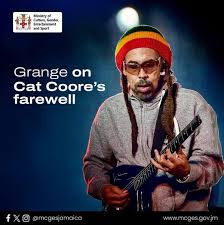
When Prime Minister Andrew Holness declared at Stephen "Cat" Coore’s funeral that “Culture is not ornamental to nation building, it is fundamental,” he was absolutely correct. I only wish he had delivered the message himself. Because if culture is fundamental, then it requires more than ceremonial presence. It requires policy, Infrastructure, Investment, and Vision.
At the funeral, Culture Minister Olivia “Babsy” Grange spoke eloquently of Stephen “Cat” Coore as a “Reggae Ambassador” who carried Jamaica’s music to the four corners of the globe with classical elegance. That tribute was fitting. Cat Coore was not simply a guitarist. He was part of a generation that transformed a small island into a global cultural superpower. But here is the uncomfortable truth:
Between 2020 and early 2026, Jamaica has lost a staggering number of musical giants. In 2020 alone, more than a dozen foundational reggae and dancehall veterans passed; including Toots Hibbert, Bob Andy, Millie Small, Bunny Wailer, Bobby Digital and others.
In the years since, the roll call has continued:
Lee “Scratch” Perry, U-Roy, Aston “Family Man” Barrett, Peetah Morgan, Calton Coffie, Michael “Ibo” Cooper, Jimmy Cliff, Lowell “Sly” Dunbar, Stephen “Cat” Coore.
This is not merely a cycle of mortality. This is the passing of architects of our music culture. These are the men and women who built one of Jamaica’s strongest economic pillars — music tourism.
For more than 75 years, Jamaica has been creating music that the world consumes. Ska. Rocksteady. Reggae. Dub. Dancehall. Mento. Revival and roots traditions. Seven distinct musical contributions from one island. Tourists do not only come for sand and sea. They come for sound.
It is estimated that nearly half of Jamaica’s annual four million visitors are influenced — directly or indirectly — by the island’s cultural and musical brand. From Bob Marley pilgrimages to live dancehall events, reggae festivals, sound system experiences, and heritage tours, the music has functioned as an invisible marketing engine since the early 1970s.
And yet…Where is the National Reggae & Dancehall Cultural Center? Where is the immersive museum where a visitor can:
Walk through the evolution from mento to ska
Experience a reconstructed 1970s sound system yard
Sit in a simulated Studio One session
Dine on authentic Jamaican cuisine
Attend nightly tributes to the greats
Purchase certified cultural memorabilia
Engage scholars and archivists preserving original masters
Where is the living archive? Where is the institutional seriousness?
Instead, we pin medals. We read eulogies, and we lower coffins.
Babsy Grange is well-liked. She is accessible. She is visible at funerals and award ceremonies. But culture policy cannot be limited to pageantry. If culture is fundamental to nation building, then it must be treated as infrastructure; like highways, ports, and airports.
Jamaica has built hotels. Jamaica has built highways, and Jamaica has built cruise ship piers. But Jamaica has not built a world-class cultural monument to the very music that put the country on the global map.
The generation that created the soundtrack of liberation, resistance, joy, and identity is fading. The question now is simple:
Will we institutionalize their legacy, or will we continue to romanticize it? If culture is fundamental — prove it.


Comments