
SLY DUNBAR DID NOT JUST KEEP TIME- HE RESHAPED IT!
- Yaawd Media

- Jan 27
- 4 min read
Written by Richard Hugh Blackford
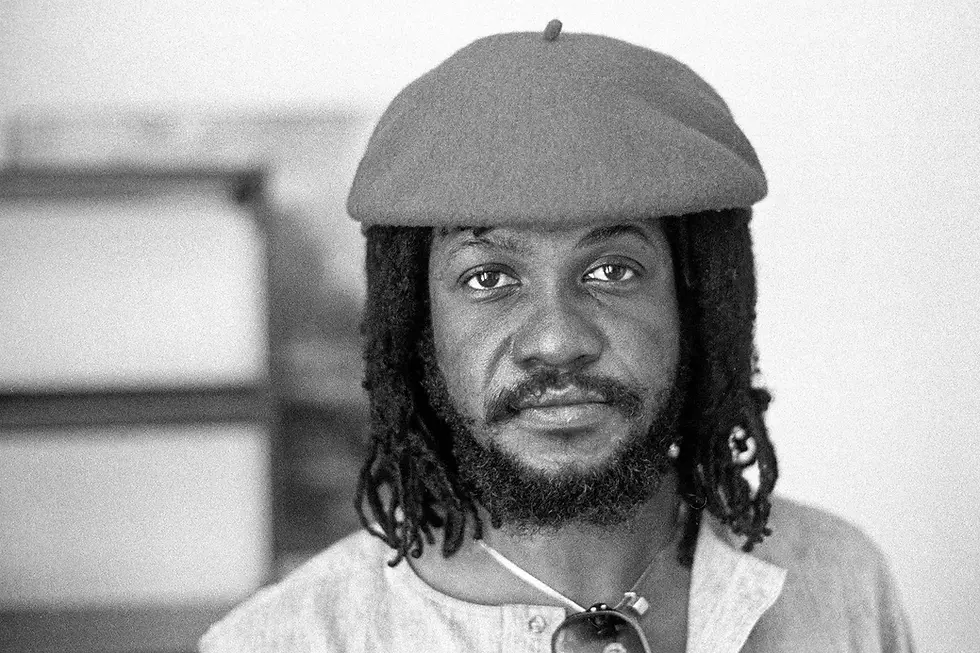
I woke up this past Monday to the news that Sly Dunbar had passed. Like most Jamaicans—especially those with a deep interest in the island’s music—the news hit like a bolt of lightning. Social media lit up like the night sky, accolades coming thick and fast.
And as I read through those torrents of praise, I was reminded that accolades are, in many ways, for the living. They remind us of the work of the dead, provide a bridge to the past, and help us find meaning in loss while clarifying our own values. It is against that background that I write this. For Sly Dunbar—despite his quiet—was a giant who walked among us.
I grew up in Kingston, Jamaica, at a time when the island’s music was undergoing an unheralded transformation. The experiments that would define our musical ethos were not conducted by white-gowned scientists or tuxedo-clad scholars, but by the brave and restless youth of Kingston’s inner-city communities. One such youngster was Lowell Fillmore Dunbar, born on May 10, 1952, in Kingston.
Although I was quite familiar with places that would become his regular haunts—the El Rancho and Trap Clubs on Red Hills Road in the late 1960s, and Channel One Studio on Maxfield Avenue in the early 1970s—I only became personally acquainted with him around 2001–2002, when he accepted an invitation to appear on our Sunday Scoops streaming programme.
Sly was quiet and retiring when he wasn’t behind the drum kit. But once the conversation turned to music, a switch was flipped—and once activated, it was nearly impossible to turn off.
His journey with the drums began early, first on his school desk. His single mother, he often noted, was deeply encouraging of his musical curiosity, and even more so when he linked up with a neighbourhood youth, Lloyd Parkes, who always seemed to have a guitar nearby. At just fifteen, Sly joined a band called The Yardbrooms, and his first recorded appearance came on Dave and Ansel Collins’ “Double Barrel.” He later joined Ansel Collins’ group Skin, Flesh and Bones.
The name “Sly” came from his admiration for Sylvester Stewart, better known as Sly Stone of Sly and the Family Stone—a nod to funk, experimentation, and fearlessness.
Sly often cited Lloyd Knibb of The Skatalites as his primary mentor, but he was equally quick to acknowledge the influence of Al Jackson Jr. of Booker T. & the M.G.’s, along with Philadelphia’s great session drummers. Closer to home, he paid careful attention to fellow Jamaican drummers such as Santa Davis, Carlton “Carly” Barrett, Winston Grennan, Paul Douglas, and Mikey “Boo” Richards—absorbing lessons from all, before forging a style that was unmistakably his own.
In 1972, Sly met bassist Robbie Shakespeare, then playing with The Hippy Boys. The two formed an immediate bond. Robbie soon recommended Sly to Bunny Lee as a session drummer for The Aggrovators. From there, the partnership was sealed. Together, Sly & Robbie would go on to redefine reggae’s rhythmic architecture.
Their move to Channel One Studio marked a turning point. Despite being new, the studio suffered from sonic limitations—most notably its four-track recording system. Working alongside owner Ernest “Ernie” Hoo Kim, Sly and Robbie pushed for the acquisition of a 16-track recorder, allowing for greater separation and clarity.
It was here that Sly pioneered the “Rockers” style; more aggressive, driving, and high-hat-heavy than the dominant Studio One one-drop. He also insisted that the drums be moved forward in the mix, giving them a sharp, commanding presence rather than the buried sound common at rival studios. By 1975–1976, Channel One had become the premier reggae studio in Jamaica.
Sly spoke often about his work with The Mighty Diamonds, especially the song “Right Time.”
“When that tune first come out, because of that double tap on the rim, nobody believe it was me on the drums,” he recalled. “They thought it was some sort of sound effect. Then when it go number one and stay there, everybody start try it, and it soon become established.”
The Independent later described the Right Time album as “Revolutionary,” calling it the breakthrough of “masters of groove and propulsion,” with Sly’s radical drumming matching the singers’ insurrection-tinged lyrics blow-for-blow.
In 1980, Sly and Robbie launched Taxi Records, producing international hits for artists such as Black Uhuru, Chaka Demus & Pliers, Ini Kamoze, Beenie Man, and Red Dragon.
When asked about drum machines and the infusion of technology, Sly was refreshingly candid. He was a drummer; the drum machine was a creation. Technology, he believed, would always drive musical evolution. Rather than resist it, he embraced it early—ensuring that he would never be replaced by it.
Sly’s drumming also powered tracks produced by Lee “Scratch” Perry, including Junior Murvin’s “Police and Thieves,” as well as Bob Marley’s “Punky Reggae Party” (recorded at Joe Gibbs’ Duhaney Park studio). Beyond reggae, Sly & Robbie appeared on Bob Dylan’s Infidels and Empire Burlesque, multiple Grace Jones albums, and recordings with Herbie Hancock, Joe Cocker, Serge Gainsbourg, and The Rolling Stones.
In 2008, Sly collaborated with percussionist Larry McDonald on Drumquesta. He also appeared in the 2011 BBC documentary Reggae Got Soul: The Story of Toots and the Maytals, described as “the untold story of one of the most influential artists ever to come out of Jamaica.”
Sly Dunbar was a 13-time Grammy nominee, winning two: the 1985 Grammy for Best Reggae Recording for Black Uhuru’s Anthem, and the 1999 Best Reggae Album Grammy for Friends by Sly & Robbie. He passed away at home in Kingston, Jamaica on Monday, January 26, 2026. He was 73 years old.
Quiet. Relentless. Revolutionary; Sly Dunbar did not just keep time—he reshaped it.


Comments