
WHO SETS POLICE POLICY- AND WHO PAYS THE PRICE? By Richard Hugh Blackford

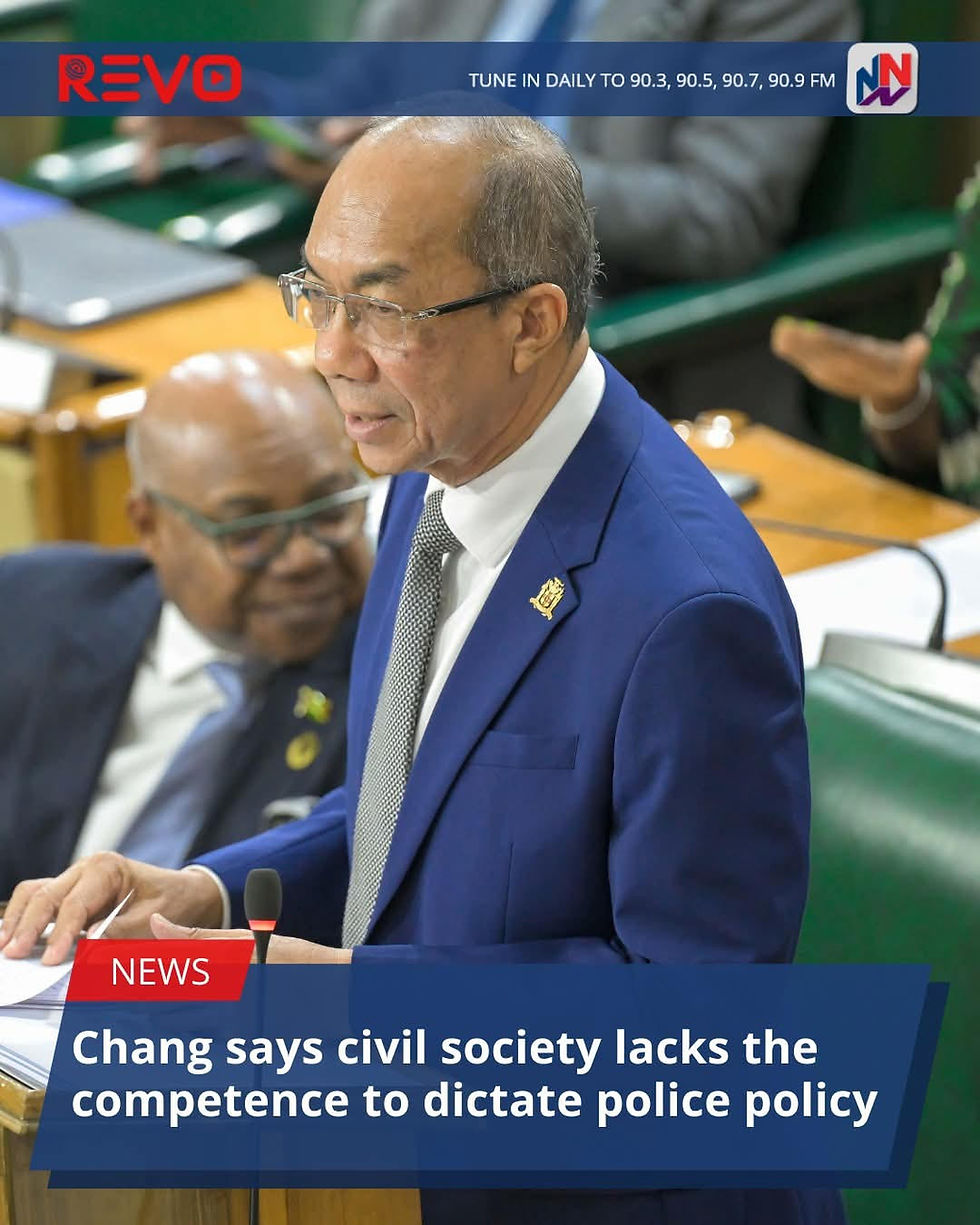
When Horace Chang, Jamaica’s Deputy Prime Minister and Minister of National Security, rebuked civil society for “trying to direct police policy,” he likely intended to draw a clear line of authority. According to him, only Kevin Blake, as Commissioner of Police, has the mandate to guide operational decisions within the Jamaica Constabulary Force (JCF).
On the surface, that assertion is administratively correct.But in substance, it misses a far more important point.
A PUBLIC ISSUE CANNOT BE A CLOSED CONVERSATION
Policing in a democracy is not a private enterprise. It is a public function exercised in the name of the people, funded by taxpayers, and constrained by the Constitution. To suggest that civil society lacks the “competence” to question or influence policing policy is to misunderstand the very nature of democratic accountability. I believe it is critical that we all understand that every Jamaican has standing in this conversation—because regardless of ones political standing, every Jamaican is subject to the outcomes. To this end, groups like Jamaicans for Justice and oversight bodies such as Independent Commission of Investigations (INDECOM) are not intruders in the policing space. They are part of the accountability framework designed to ensure that power is exercised lawfully, proportionately, and transparently.
Silencing or dismissing these voices does not strengthen policing, it weakens legitimacy.

THE BODY CAMERA QUESTION: EVIDENCE OR ABSENCE?
The Minister’s comments come at a time when scrutiny of the JCF is intensifying—particularly around the lack of body-worn camera footage during planned operations.This is not a trivial concern.
In an environment where:
Over 400 Jamaicans have been killed by police in roughly 16 months, and where many of these incidents arise from targeted operations, and where the police routinely assert that suspects engaged them in lethal confrontation,…the absence of independent, verifiable visual evidence becomes deeply problematic.
Body-worn cameras are not about micromanaging police. They are about:
Protecting officers from false accusations
Providing objective accounts of critical incidents. Equally, the cameras helps to
reinforce public trust in the legitimacy of force used by the police.
When such tools are inconsistently used—or absent altogether—it leaves the public to rely on unverified narratives in matters of life and death. That is not a sustainable model for trust.
THE COMMISSIONER’S WARNING- AND ITS IMPLICATIONS
This situation is made even more complex by the recent admission from Commissioner Kevin Blake himself, who acknowledged that “rogue officers” are undermining the gains made in crime reduction. Such an admission is significant, because it raises a contradiction:
On one hand, leadership acknowledges internal misconduct while on the other, criticism from outside the force is discouraged or dismissed.
If rogue behavior is real—and damaging—then scrutiny is not interference; it is a necessity.
WHEN LETHAL FORCE BECOMES ROUTINE
The deeper concern, however, lies beneath policy debates and public statements. With hundreds of fatal police encounters concentrated within a relatively short period, patterns inevitably emerge:
The same types of operations
Similar official accounts of confrontation
And, in some cases, officers linked to multiple fatal incidents
Sociological research is clear on one point:
repeated, undeterred use of lethal force can become normalized behavior. When that happens, something shifts. Lethal force is no longer exceptional; it becomes operational. And when an institution reaches that stage, it risks cultivating individuals for whom violence is not a last resort, but a practiced response.
That is not just a policing issue but becomes a national security risk.
THE DANGEROUS FRAMING OF CRITICISM
Minister Chang’s warning against undermining the police appears, intentionally or not, to frame criticism as a threat, but criticism—especially informed, evidence-based criticism, is not the enemy of policing. It is the safeguard against its excesses. To equate public concern with interference is to edge dangerously close to a model where:
Policy is insulated from scrutiny
Force is insulated from accountability
And outcomes are insulated from question
That is not democratic policing. That is administrative control without civic balance.
THE REAL STAKES
Jamaica is not debating abstract policy. It is grappling with a reality where crime is falling and Police homicides are rising. In response, oversight bodies are raising alarms while political leadership is urging restraint—not of force, but of criticism. That combination should concern every citizen. Because once a society begins to accept that security decisions belong only to those who wield force, it has already conceded too much.
THE BOTTOM LINE
Policing authority may reside with the Commissioner, and operational control may rest within the JCF; but legitimacy belongs to the people of Jamaica. And legitimacy cannot be commanded.
It must be earned through transparency, accountability, and respect for the rule of law.
Jamaica’s path forward will not be determined by how effectively it silences critics. It will be determined by how seriously it listens to them.


Comments